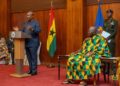















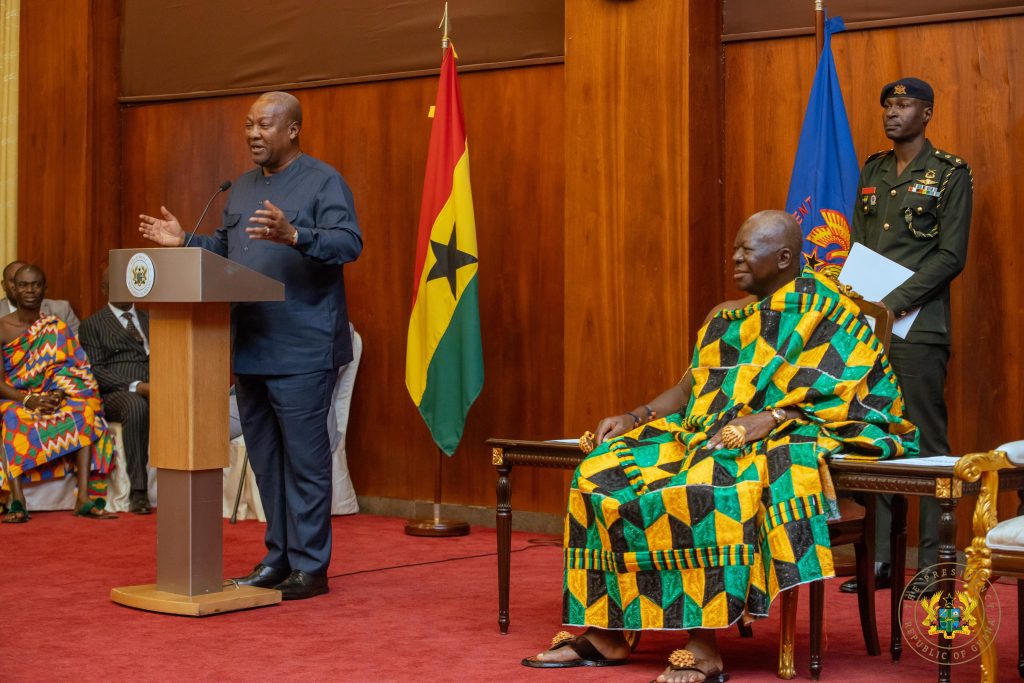
Notable institutions and personalities, including the National House of Chiefs, Peace Council, Christian Council, Chief Imam, Catholic Secretariat, UNDP, British High Commission, elected regional ministers and the National Security Coordinator, have been invited to the meeting.
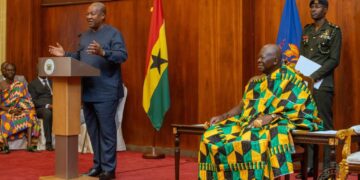
According to 3News sources, “the presentation marks a significant milestone in the national efforts led by His Majesty Otumfuo Osei Tutu II towards restoring lasting peace, stability and reconciliation in Bawku and its adjoining communities.”
Background
Several mediation committees and efforts have been involved in the long-standing Bawku conflict, which primarily involves a chieftaincy and ethnic dispute between the Kusasi and Mamprusi communities.
Sponsored Content
Key mediation bodies include historical government-established committees, a local inter-ethnic peace committee, the National Peace Council and a high-level, ongoing effort led by the Asantehene.
Historical and State-Led Committees
Opoku-Afari Committee (1957): The colonial government established the first major committee to investigate the Bawku chieftaincy claim. It affirmed the Kusasi Naba Abugrago Azoka I as the legitimate chief, a decision later upheld by the Court of Appeal in 1958. However, the Mamprusi faction refused to accept the verdict.
Government Interventions: Various post-independence governments have attempted mediation, including efforts by President John A. Kufuor in 2008 and Vice President John Mahama in 2009. These efforts were often combined with security measures, laws and decrees, though a lasting resolution has remained elusive.Remove ads
Bawku Inter-Ethnic Peace Committee (BIEPC)
Formation (2009): The BIEPC was a grassroots-led initiative formed with support from civil society organisations (CSOs) such as the West Africa Network for Peacebuilding (WANEP) and local associations.
Mandate: The committee aimed to foster intercultural dialogue and address underlying grievances, such as farmland disputes and market allocations, but explicitly excluded the core chieftaincy dispute, which was considered a “settled matter” by law.
Impact: The BIEPC was considered successful in maintaining relative peace between 2010 and 2019 through local engagement, but violence resumed around the 2020 elections.
Asantehene-Led Mediation
Mandate: Beginning in 2023–2025, President John Dramani Mahama mandated the Asantehene, Otumfuo Osei Tutu II, to lead a high-level mediation process to resolve the decades-old conflict.
Process: The Asantehene has been holding mediation sessions at the Manhyia Palace in Kumasi with delegations from both the Kusasi and Mamprusi factions. The process involved hearing from both sides. Mediation efforts ended on December 1, 2025.
SOURCE: 3News.com